General Information
This branded website is publicly available at https://curtain-call-theatre-talks.github.io/Curtain-Call/index.html
This website was created by:
- Laurens Veldkamp (ID: 220969)
- Pascal Karssen (ID: 224960)
- Márton Hanti (ID: 212096)
The improvements on this website for the redo were made by Márton Hanti (ID: 212096).
Content
All of the content on the website can be found in this table, paired with the student number of whoever created it. Since I (Márton Hanti) did the improvements for the redo alone, my number is next to almost every piece of content, either because it was made specifically for the redo, or because I took part in its creation originally, when the project was running.| # | Student ID | Name and link of content |
|---|---|---|
| 1. | 212096 | Landing page, intro |
| 2. | 212096 | Figma app demo |
| 3. | 212096, 220969, 224960 | Main introduction copy |
| 4. | 212096, 220969, 224960 | Vision and values |
| 5. | 220969 | Social media section |
| 6. | 212096 | Carousel section |
| 7. | 212096 | Trending conversations |
Production
Design Elements
-
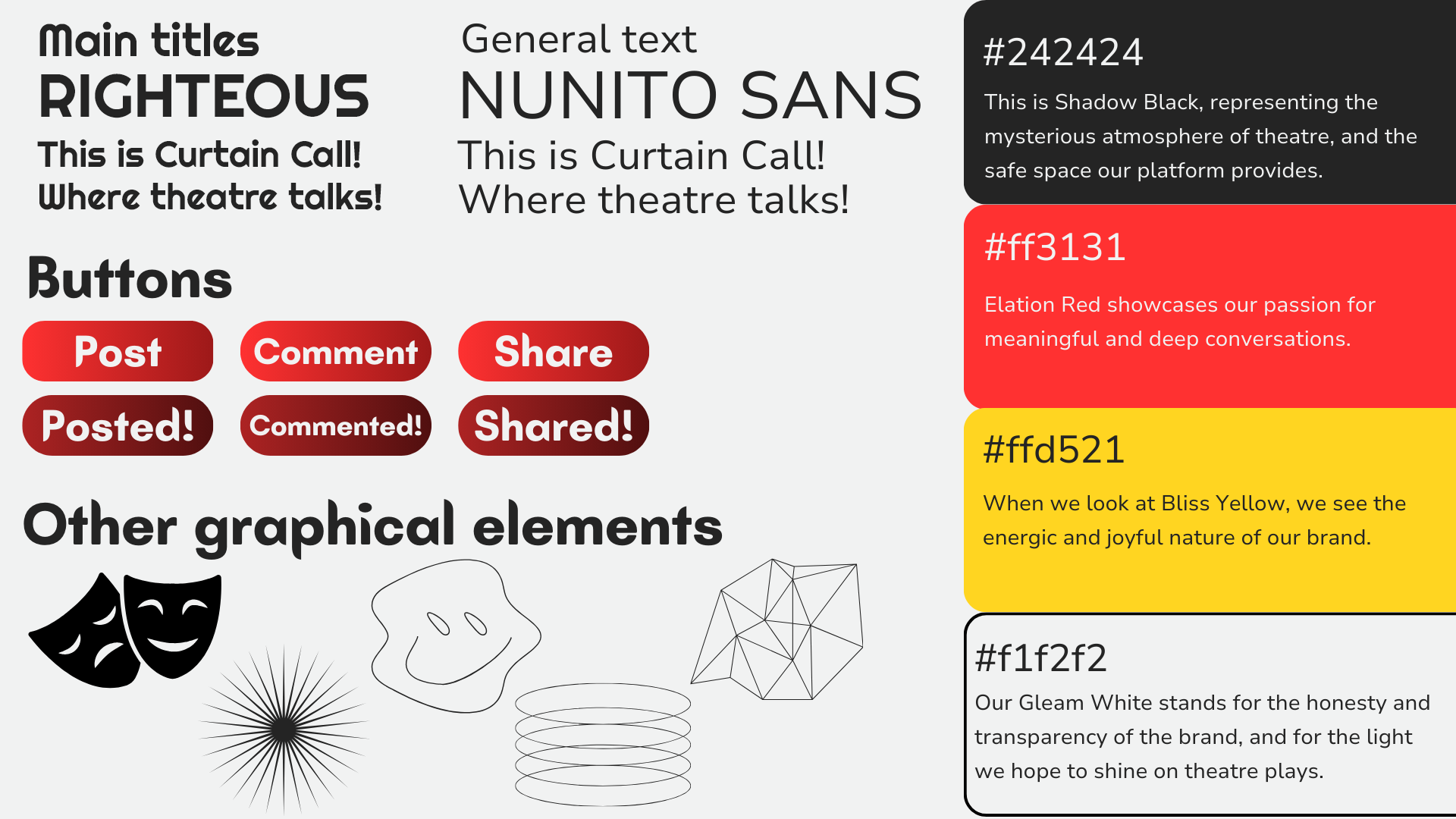
- Colors:
#242424 This is Shadow Black, representing the mysterious atmosphere of theatre, and the safe space our platform provides. - #ff3131 Elation Red showcases our passion for meaningful and deep conversations.
- #ffd521 When we look at Bliss Yellow, we see the energic and joyful nature of our brand.
- #f1f2f2 Our Gleam White stands for the honesty and transparency of the brand, and for the light we hope to shine on theatre plays.
- Colors:
- Font choices: Curtain Call uses two main fonts as part of its brand identity: Righteous for titles, and Nunito Sans for general text. Righteous fits our values very well, as its sharp edges communicate stability and safety, but the funky corners and curves still show the playful nature of our brand. Furthermore, since it is a Sans Serif font, Righteous is easy to read on any screen. Nunito Sans has more of a general appearance, with this choice, the main goal was just easy readability.
- The structure of the website is meant to simulate the theatrical experience. The landing page is meant to represent the act of preparing for the show and entering the theatre, whilst the about us page represents the show itself by providing most of the content. The corporate page could also symbolize what is happening behind the scenes to make a show into reality. The website also contains the posts that we send out to our social media as a means to help market both our socials and our app.
- All these elements must be justified by referring to the theory and/or vocabulary of design
- Relation to other units:
- Values and personality of the brand: To ensure that the website fits the values and personality of the whole brand, we made sure to create a user experience that already feels familiar to our target audience. As mentioned already, the three-act structure of the website is similar to the process of attending a theatre show. Furthermore, the website has an inviting and comfortable atmosphere, thanks to our friendly colors and fonts, and the large, easy-to-navigate sections.
- Marketing: To achieve brand consistency, all throughout the socials, the website and the app itself the same visual language is used. The above-mentioned colors evoke feelings of coziness, safety and friendliness, while the fonts look approachable, welcoming and are easy to read. A preview of the posts is visible on the website itself, making the creators of the website visible even if one doesn't visit the Instagram page. This makes the brand itself feel transparent and trustworthy. As the main goal of the website and the marketing is to convince visitors that our app is a more efficient and welcoming platform to share their opinion, even if they would feel afraid to do so elsewhere, a product demo is included. This way the user can experience using the app firsthand, is able to see its functionalities, and can decide to download it. Lastly, since our campaign also aims to inspire people to share their opinion, we included previews of ongoing conversations on the app, so that people can already start forming their own opinions.
- Match with unique value proposal: Our unique value proposal is a communication platform specifically designed with the needs of theatre fans in mind, and to transform theatre from an intimate experience to a social one. Other forums already exist with this purpose, but these are usually subforums on large social media websites, which are not tailored for our target group. The website is designed with the personalities and preferences of these people in mind, showing at each section that we are not just another social media platform, but an app designed specifically for their needs. This will increase the likelihood of people wanting to share their opinion, and also inspire others who did not take part in discussions so far, to be more social about theatre.
Style Guide
Credits
- Image 1: "silhouette of three performers on stage" by Kyle Head: (unsplash.com/photos/red-and-white-stadium-seats)
- Image 2: (unsplash.com/photos/red-and-brown-stage-with-lights)
- Image 3 Silhouettes: (unsplash.com/photos/silhouette-of-three-performers-on-stage)
Testing Report
- Does the user understand the purpose of the website and the app after viewing the contents of the site?
- Are they able to get through the app demo without guidance?
- Would the user feel encouraged and safe to share their opinion if they downloaded this app?
- From the content visible on the website, find out what the function of the app is
- Find and get through the app demo without guidance
- Find a link to the socials of Curtain Call
- Find the download links of the app
- What do you think the purpose of the website and the app is?
- While using the app demo and the website, did you feel like you are in a safe environment, and did you feel encouraged to share your opinion?
- Were there any moments during your experience where you felt frustrated or annoyed? If yes, are there any improvements you would suggest?
- Were there any moments during your experience which you liked in particular?
- If this was a real app, would you use it?
- Positive and negative aspects of the UI/UX that have been identified, ranked by importance.
- Improvements that have been implemented on the final website (or that would be implemented if doing so would be too complex)
-
This is us
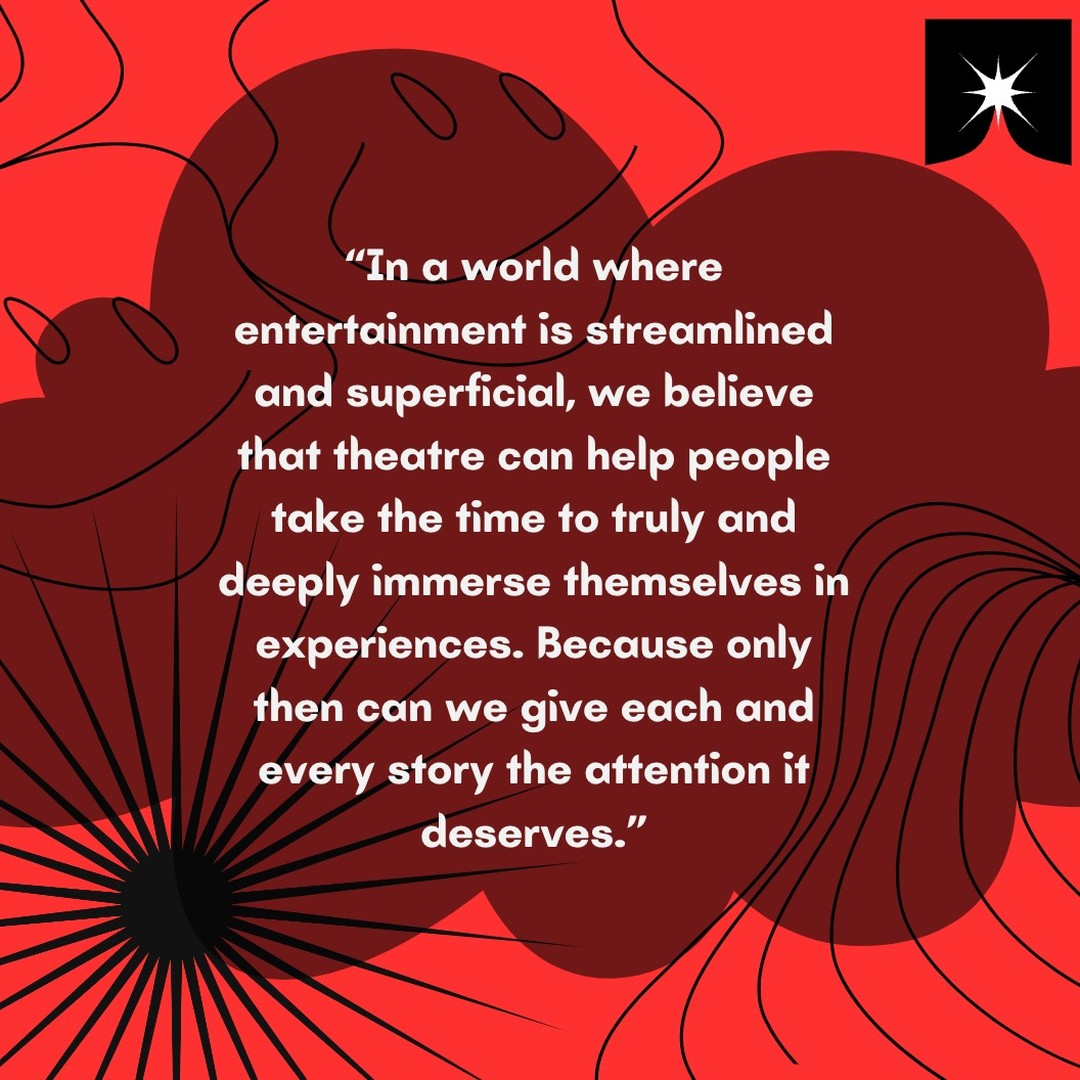
This is what we stand for! 🔥🔥
We're curtain call
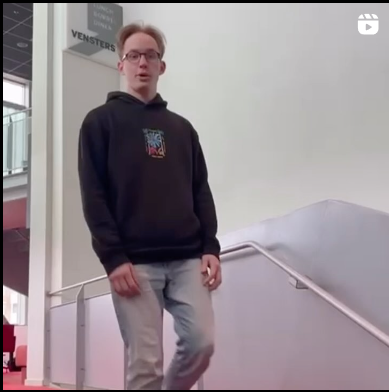
LAURENS😳😳
Theatre Talks
Actual footage of people using our app! 🤣🤣😍😍

Meet Pascal
Meet Pascal, our spokesperson!!! 🎯🎯 He likes all kinds of theatre as long as it has some kind of message in there that he likes. He is very good at keeping the team motivated and keeping the marketing on point! 🔥🔥🔥
Meet Márton
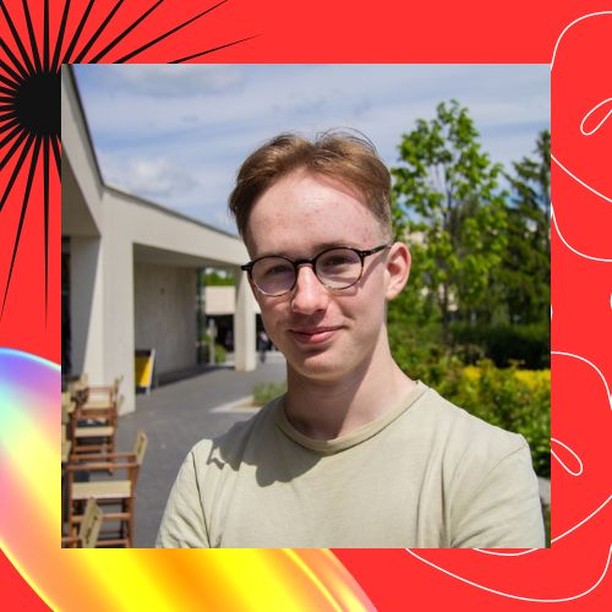
Meet Márton, our Manager! 🎉🎉 He loves all kinds of theatre, but mainly opera. Without his planning skills and control over the project Curtain Call would be nowhere! 👔

Meet Laurens
Meet Laurens, our head of development! 😄😄 He personally loves theatre, and his favourite play is the SpongeBob musical! With his bright ideas and fun personality, he ensures that our platform will become your go-to place for theatre discussions!🎭
Introducing
Welcome to Curtain Call, where theatre talks!🎭If you love theater just as much as we do, but you struggle to share your passion with others, we got you! Let us turn your favorite plays into an inspiring community experience!💬Website coming soon🤫
Management
Lean Canvas
Problem
- Right now, the only places where you can really communicate about other plays with other theatre lovers is mostly at the theatre itself after the play, or on platforms not dedicated to theatre, such as Reddit or X (Twitter). These alternatives do not answer the wants and needs of theatre lovers. Aspects such as a special account where people who worked on the play can share certified lore and behind the scenes will be added to our platform. where less dedicated platforms do not have a dedicated place for this. Furthermore, many people feel that there is a sense of elitism within theatre circles, which can make them look less approachable. The friendly user interface of our app and the possibility to stay anonymous will make sure that everyone feels safe sharing their opinion.
Solution
- With verified accounts of people who have worked on plays we hope to make it a platform where people can come to learn and share new opinions and insights of plays you have liked or even disliked. This way we expect to receive consumers will make new friends in online communities and start following certain verified accounts that share information they’re interested in. Making them come back to our platform for new information.
Customer segments
- Actors, theatres, and connected organizations
We wish to create a platform that attracts consumers that are closely working with new and old plays join are platform to gain a following for themselves and even have the opportunity to gain popularity to their play. For an example, we want consumers such as a theatre critic recognize our platform as a way to share their knowledge with others and inform people of new insights. - Devoted theatre fans of all ages in the Netherlands.
Our platform is targeting devoted theatre fans that would like to talk more about theatre and know more about subjects they’re interested in.
Unique value proposition
- With our platform we want to remove the difficulties of communicating with other theatre lovers by making it easy and possibly anonymous. You don’t have to wait around at the theatre for someone to give insights. But instead, you can follow verified accounts who are more knowledgeable about certain plays. For those verified accounts it can be a way to gain popularity for themselves and for the play they are working on.
Unfair advantage
- Like no other platforms we specialize in theatre lovers to guarantee that their needs are met. We take away the discomfort of long waits and social anxiety for theatre fans to share and gain knowledge.
Channels
- To inform customers of the existence of our platform we have made a Facebook and Instagram account to gain customers. By sharing posts and other things we expect them to warm up to the idea of a new platform to help them.
Key metrics
- Followers, downloads, website visitors, views, and likes.
Revenue streams
- Considering all our revenue streams, we expect to make an estimated 50,000 dollars.
This is based on an expected 500 thousand views on our website a month. Which makes 12 thousand dollars a year.
https://www.playwire.com/blog/how-much-ad-revenue-can-a-website-make
On Premium accounts we want to ask 7 dollars a month for added features. We want to implement this only after 6 months, however. We expect to have about 400 premium accounts resulting in a revenue of 17 thousand dollars.
We expect to make the most with our partnerships. By reaching out to theatres or organizations with the opportunity to promote their theatre or play. The average we want to ask for this is 2 thousand dollars and by doing this once a month we get an estimated revenue of 24 thousand.
All these methods result in a total revenue of 53 thousand dollars in the first year.
Cost structure
-
To calculate the cost per unit we need the calculation, which is (Total fixed costs + Total variable costs) / Total units produced. The total fixed costs are the building of the platform the staff and the app registration.
As we are building of the platform internally, we expect to lose around a thousand dollars for this. For the usage of developing software and based cost.
For the staff we want to hire only after 6 month and pay ourselves in equity we only expect to lose 12 thousand dollars for staff (two part time employees for 1000 dollars a month).
To have our app on the app store it will cost. For the app registration subscription and fee apple is 99 dollars subscription per year and google is a one-time 25-dollar fee resulting in 124 dollars total.
Combining all these costs. The total fixed costs result in 12.124 thousand dollars.
The variable cost consists of the maintenance of the platforms, it is variable as more users make it harder to upkeep the platform. We expect the costs to be around a hounded dollars a month so 1200-dollar total. another variable cost is the marketing. As when we increase in consumers, we also need to reach more people who we haven’t reached yet. This will start at 20 buck a month but will later increase by 100 dollars a month. So around 900 dollars in total for a year. Our final variable cost is company relations. To upkeep relations and built relations this is variable as it will be more as we reach bigger audiences. We expect this to be our main earning source and are willing to invest a lot in it we have set aside a budget of 10 thousand dollars for the first year. Calculating all these costs the total variable costs are added up to 12100 dollars.
As the only unit we are selling is accounts we are estimating 10 thousand consumers to use our platform. So, the final formula should be: (12.124+12100)/10.000 ≈ 2.4 dollars per unit.Services/products
- Our platform will guarantee an easy way for theatre lovers to share and express their opinions while also receiving those of others. People working closely to theatre could share new insights and behind the scenes to gain popularity for themselves and for their work. From the interviews it became apparent that the mostly go to plays in fixed groups but are open for new people to join and theatre lover are over all very open and accepting people. Elitism is a big thing in theatre communities, and we are solving that problem by bringing strangers together and letting them discuss.
Validation of Assumptions
Problem interviews
Problem interview 1 Vanessa;
She feels that it is hard to join the community due to how elitist the culture around theatre can get. Prices can sky rocket to the point that it feels like it’s only catered to a certain social class, it can be really hard to watch certain plays such as Hamilton, and there will still be a huge queue even with it’s super pricey costs.
Problem interview 2 Elize:
She finds theatre much more accessible during high school, however, once you are out of high school it starts to become difficult to get into theatre. She also believes that there is a big sense of elitism when it comes to theatre, since some people think that you aren’t a real theatre lover if you haven’t seen certain plays, and the actors are expected to already know everything when they start. Theatre groups can be a very judgemental environment which is deters many people from getting into this, according to her opinion.
Problem interview 3 Quinten:
He finds getting physical tickets a big hassle, as many theatres still only use physical tickets.
Problem interview 4 Mounsif:
He thins that some people can be intimidating to talk to. There are groups of people who can be difficult to deal with in theatre but thats not always the case. To him there is barely anything inconvenient about theatre.
Problem interview 5 Emese:
She couldn't really name any problems in her current relationship with theatre, so she gave some recommendations for our app. She called our attention to the fact that there are already similar alternatives that exist, for example communities on Reddit or Twitter, however these are not catered specifically towards theatre, and they don't contain specific scheduling or library features, so she does think that our app would add value to developing these communities.
Solution interviews
Solution interview 1 Lars:
He appreciates how the app would recommend plays. He would prefer if there was a physical button to press to go back instead of swiping.
Solution interview 2 Elize:
Recommends adding an anonymous feature for when leaving a review. She would also want to see reviews of the play before watching the play to see what others think beforehand.
Solution interview 3 Quinten:
Quinten would like to have a reaction feature below the posts of others, so that he can give his own opinion on what someone else has to say. He would also want profile pages so that people get to know more about the commenters.
Solution interview 4 Mounsif:
He finds the app simple and efficient. He doesn't see many downsides to the app.
Solution interview 5 Emese:
She thinks that if a play really made her think or grabbed her attention, she would be curious what others thought about it, and she would probably use the app. She also asked if it would be anonymous, since she would feel more safe sharing her opinion that way. The design of the home screen was a bit confusing for her, she didn't get what the logo was meant to represent at first. She gave an idea for a feature: rating not just the play itself, but for example giving scores to the artists themselves. "Sometimes it's hard for people to voice their opinions by themselves, but if certain questions are asked, for example about the length, the atmosphere, and so on, it would be easier to rate it, and then these statistics could also be shown in the app. At the end of this questionnaire, there could still be an opportunity to provide further feedback.
Appendix
Please use the list below to provide links to evidence for all parts of your justication. Please double-check all links before delivering the website. Do not hesitate to refer to these numbers above.
Marketing
Context of campaign and promotional activities
Context of the campaign: The message that Curtain Call aims to convey to its audience is simple: Theatre can easily be transformed from an intimate experience to a social one. Our whole promotional campaign was designed with this message in mind. With our communication, we want to inspire more people to go to the theatre, and connect them to each other in the process, so they can exchange opinions, talk about performances, form connections, and in the end, get a much more nuanced understanding of the art of theatre. Keeping these goals at the forefront of our campaign, we consinstently use a very friendly, reassuring and personal tone, so people feel that their intimate opinions and thoughts are safe with us, and Curtain Call is an open place for discussions.
Executed activities: First, we announced the brand itself and teased the launch of the app and website. Then we introduced our team in several different posts. After this, we wanted to show a bit more personal side of the brand, so we created some sketches in the form of Reels. These played on existing social media trends, showed the effect of people using our app, and one of them also featured our manager talk about the app and its features. We also introduced our target audience to our vision and values in the latest posts, and finally announced the launch of the website.
Chosen channels and goals: The channels we chose are Facebook and Instagram, as our target group is between the ages of 16-30, which is for the most part in generation Z (Beresford research, 2024). These people have been shown to use TikTok and Instagram (Hoekstra, Jonker, & van der Veer, 2023). Our goals on these platforms are 100 Instagram views, 300 TikTok views and to reach 100 Instagram accounts and 300 TikTok accounts by the 29th of March.
Learning Points
Learning point 1: The more planning, the better. We have learned that when it comes to actually executing a marketing campaign, if we want everything to work how we intended it to work, it is of utmost importance to plan out everything well in advance, down to the smallest detail possible. We had many great ideas for marketing, like certain Instagram Reels, videos about people using our app, and so on, but in the end we didn't have time to actually create most of these, due to a lack of planning. We didn't create a posting schedule beforehand, we just had certain post ideas planned out, but no actual plan for when and what we are going to post. This would have allowed us to create an overarching concept through our advertising, and make it much more enticing for our target audience. Through the execution process, we have recognized the importance of planning our activities in advance, and sticking to that posting schedule. In future projects, we will pay much more attention to planning.
Learning point 2: It is easy to get too ambitious. As none of us had any previous experience about what it's like to establish social media presence from nothing for a brand that was just created, we found it difficult to come up with realistic goals. The only experience we could base these on was our own social media pages, and our previous projects. Towards the end of the project, we started realising that our goal of 100 followers on Instagram was a bit too ambitious compared to what we managed to reach in the end (Actually, almost none of the pages created for Brand Development reached this number.) Therefore, it is important to take into consideration our limitations, such as the fact that this is a completely new page and no one is going to hear about it naturally, if we don't establish a constant presence. On the other hand, we could have also done more to get followers, such as specifically asking people to follow us, or in case of a real brand, even paid advertisements.
Learning point 3: Knowing your audience is the most important part of any marketing project. The interviews we did were a vital part of our development process. Ideally of course if someone wants to develop a service for a specific audience, it is the best if they themselves are already part of that audience, or at least have something to do with the topic. But here, since we were going into a completely new field blindly, gathering information was even more important. Our first versions were created based only on assumptions, and the feedback we received from our test subjects was invaluable to identify real problems that these people have. As we also mention in our future planning, if we would continue the project, we would do further interviews to get real in-depth insights into the needs, wants and pain points of our audience, and further iterate the app based on this.
Future Planning
We are very happy with the results of from the marketing of our websites however we do believe some things could have been done better. At the end of this project, we sat together and worked out what could have been done better and what could have gone better.
First, what we all believe that could have gone better is the research. As we planned our interviews too late sometimes giving us a small time to act on the feedback and problems, we got from it. Causing us to be stressed at points where it could be avoided.
Another thing that could have gone better is the communication in the group. There were some instances where two of us both did the same work, or another part of the project got left out. Something that is easily prevented by just dividing the work together.
For the future of this project, we would want to do more interviews to perfect the website even more. Once an audience would has been acquired we would look into what other features could be added to the app to make it more entertainable for theater lovers
Professionalism
This is a link to our facebook, below are the posts and links to our instagramAll the posts that have been shared are according to the brands style and color pallet of red, black, yellow white. The videos we posted on our Instagram are meant to be funny posts as it is shown that our audience is still young so funny short posts have been shown to do the best on social media. Furthermore we started of with introductory post to us to get a closer bond with our audience and show that we are also humans not just an organization